About the project
The project “Steps for functional rural communities” is implemented by Ecotop Foundation with financial support from from Active Citizens Fund Romania programme founded by Iceland, Liechtenstein and Norway through the EEA Grants 2014-2021. For more information visit www.eeagrants.org.
The aim of the project is to increase the capacity of vulnerable groups in 10 multiethnic rural communities in Bihor County to initiate and organize activities that lead to citizen participation in decision making, improving access to work, improving multicultural dialogue and increasing educational performance.
The project objectives are:
Objective 1
Creating the premises for sustainable functional communities in 10 multiethnic rural communities in Bihor County in 28 months.
Objective 2
Development of skills and knowledge of a number of 150 people belonging to vulnerable groups from 10 multiethnic rural communities in Bihor County in order to access a job or develop an income-generating activity.
Objective 3
20% increase in the number of students belonging to vulnerable groups in 10 multiethnic rural communities, who pass the national assessment exam.
Objective 4
Improving the applicant’s organizational and financial management systems and practices during the project.
The activities cover the following aspects:
- Facilitating, organizing, activating and empowering the community, for 15 months in each of the mentioned communities: identifying and mobilizing community resources, supporting and stimulating the creation of a favorable framework for action, identifying leaders and forming local action groups, identifying and addressing community issues, improving collaborative and personal leadership, launching development initiatives and solutions from within the community, mediating between interest groups and inter-institutional cooperation, informing / communicating to the community of various opportunities (grants, employment, entrepreneurship), assisting people of local interest in local development activities, multiethnic cultural marketing and promoting the locality. The first stage of community facilitation (April 2021 – June 2022) includes the localities of Lugașu de Jos, Țețchea, Telechiu, Batăr, Talpoș, Ciumeghiu, and the other 5 localities enter the second facilitation cycle (May 2022 – July 2023);
- Supporting local entrepreneurship and access to the labor market: employment advice, counseling and support for setting up income-generating activities;
- Promoting multiculturalism and interethnic dialogue: making and broadcasting 6 documentary films about the culture, traditions and customs of ethnic minorities, presenting values less known to the general public and contributing to the promotion of multiculturalism, mutual understanding and interethnic dialogue;
- Support for increasing the promotion of the gymnasium cycle and access to high school: school mentoring activities for 7th and 8th grade students, psychological assessment and career guidance, support activities for students at risk of dropping out of school.
When and where?
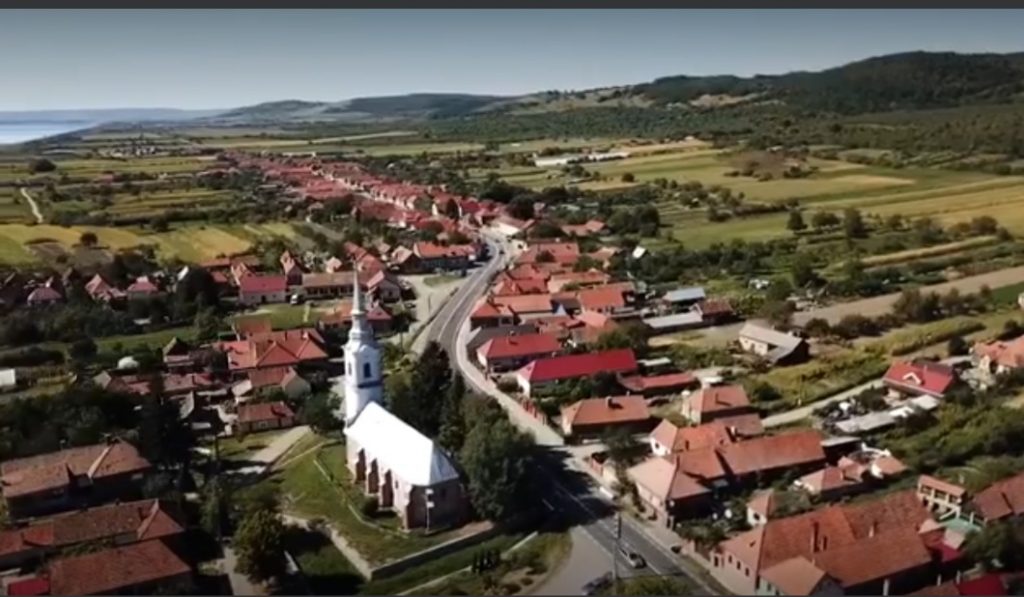
The project activities take place over a period of 30 months, between March 2021 – August 2023, in 10 multiethnic rural communities in Bihor County, as follows:
- Luncșoara (Aușeu),
- Lugașu de Jos, Lugașu de Sus (Lugașu de Jos),
- Țețchea, Telechiu (Țețchea),
- Batăr, Talpoș (Batăr),
- Ciumeghiu, Ghiorac (Ciumeghiu),
- Dobrești (Dobrești)
Philosophy
“The purpose of any action of community organization is the acquisition of power by the people, so that the community can know its needs, to be able to organize them and to be able to fight for their fulfillment. To acquire power victories are needed because only people who enjoy suffering will persevere in a lost cause. For involvement in a community development action to make sense, the people of that community must be constantly faced with results or victories” (Alexiu & Anăstăsoaiei, 2001)
Vision
Multiethnic rural communities represent more than the value given by the history, knowledge, traditions and customs of the component ethnic groups. Organizing a functioning community involves concentrating facilitation and empowerment activities on common issues, recognized and felt as such by community members. The results obtained from learning activities on communication, negotiation, organization, planning, civic involvement are the basic elements of the multiethnic community in the fight for social justice in order to change policies, behaviors and attitudes related to identified problems and needs. This form of organization ensures the sustainability of the community, being the institutional and structural element partner of the local authority.
Policy
The project addresses three key directions for a functioning community - community organization, education for the future and entrepreneurship. As functional communities become more organized, they gain internal building capacity through their members, improving their knowledge of the issues / needs that concern them. Community associations, the institutionalized form of the organization, will thus be able to focus on supporting the study and solving the problems of their own communities, public actions, education, policy or service development.